CALL: INT’L PHONE: (732) 229-3444 | TOLL FREE: (888) 362-6888
Select Page

Понимание Лив-Обновлений при Использовании 1win Вход

Понимание Лив-Обновлений при Использовании 1win Вход

В данной статье мы подробно рассмотрим, что такое лив-обновления в контексте использования платформы 1win и как они помогают пользователям оставаться в курсе событий во время спортивных ставок или игр. Лив-обновления представляют собой информацию в реальном времени, которая позволяет пользователям принимать информированные решения и оперативно реагировать на изменения в ходе событий. Мы обсудим преимущества использования лив-обновлений, их значимость и как правильно с ними работать на платформе 1win.

Что такое лив-обновления?

Лив-обновления — это сообщения или данные, которые обновляются в реальном времени по мере изменения ситуации на поле или в игре. Они могут касаться различных аспектов, таких как:

  • Текущий счёт матчей.
  • Удаления игроков.
  • Изменения в ставках и коэффициентах.
  • Статистика игроков и команд.
  • Другие важные события, влияющие на исход игры.

Все эти данные позволяют пользователям делать более обоснованные решения при ставках, поскольку они видят, как события развиваются в реальном времени.

Преимущества использования лив-обновлений

Использование лив-обновлений предоставляет множество преимуществ. Вот основные из них:

  1. Информированность: Пользователи всегда в курсе текущих событий и могут быстро адаптировать свои ставки в соответствии с изменениями.
  2. Быстрая реакция: Лив-обновления позволяют пользователям мгновенно реагировать на происходящее, что увеличивает шансы на успех.
  3. Дополнительные данные: Доступ к статистике и аналитическим данным помогает пользователям делать более осознанные ставки.
  4. Удобство: Мобильные приложения и веб-сайты платформы 1win предоставляют лив-обновления, что значит, что информация доступна в любое время и в любом месте.
  5. Повышение интереса: Лив-обновления делают процесс ставок более интерактивным и увлекательным.

Как работает система лив-обновлений на 1win?

Система лив-обновлений на платформе 1win построена на основе сложных технологий, которые обеспечивают мгновенную передачи данных. Пользователи могут наблюдать за изменениями как на мобильных устройствах, так и на компьютерах. Это достигается за счёт следующих шагов:

  • Интеграция со спортивными событиями: Информация поступает с полей и залов, где проходят матчи.
  • Обработка данных: Серверы 1win обрабатывают поступающую информацию и обновляют все необходимые показатели в реальном времени.
  • Отображение данных: После обработки данные моментально отображаются на платформе для пользователей.

Этот процесс обеспечивает высокую скорость и точность предоставляемой информации, что критично для успешных ставок.

Советы по использованию лив-обновлений

Чтобы максимально эффективно использовать лив-обновления на платформе 1win, рекомендуем обратить внимание на следующие советы:

  1. Следите за изменениями в ставках, так как они могут меняться в зависимости от происходящего на поле.
  2. Используйте статистику для анализа предыдущих игр команд или игроков.
  3. Знайте, когда делать ставки: иногда лучше дождаться определенного момента в игре для повышения шансов на выигрыш.

Эти небольшие стратегии помогут вам извлечь максимальную выгоду из лив-обновлений и повысить ваш общий опыт ставок 1 win.

Заключение

Лив-обновления являются ключевым элементом успешного участия в спортивных ставках на платформе 1win. Они предоставляют пользователям актуальную информацию и дают возможность принимать быстрые и обоснованные решения. Используя лив-обновления, вы можете значительно увеличить свои шансы на успех и сделать процесс ставок более увлекательным и интересным.

Часто задаваемые вопросы (FAQ)

1. Что такое лив-обновления?

Лив-обновления — это информация, которая обновляется в реальном времени в ходе спортивных событий и позволяет пользователям следить за изменениями.

2. Как получить доступ к лив-обновлениям на 1win?

Для доступа к лив-обновлениям просто зарегистрируйтесь на платформе 1win и используйте мобильное приложение или веб-сайт.

3. Как лив-обновления помогают в ставках?

Лив-обновления предоставляют свежую информацию, позволяя пользователям принимать обоснованные решения и отвечать на изменения в реальном времени.

4. Могу ли я использовать лив-обновления на мобильном устройстве?

Да, 1win предлагает лив-обновления как на мобильной версии сайта, так и в приложении для смартфонов.

5. Есть ли ограничения на использование лив-обновлений?

Нет, все зарегистрированные пользователи могут использовать лив-обновления без каких-либо ограничений.

What is the difference between compression set suffix B2 and B3 in ASTM-D1056?
QUESTION:

astmWhat is the difference between compression set suffix B2 and B3 in ASTM-D1056?
ANSWER:

B2 requires a maximum set of 25% B3 allows a maximum set of 35% – John Bonforte, Sr.

People who wanted to learn about ASTM-D1056 were also interested in referencing ASTM 1056 MRPC PRESENTATION 2009 [PDF] – Understanding ASTM D1056 – American Society For Testing Materials D1056 (ASTM D1056); and ASTM D 1056 Explained [PDF]

2 different listings in UL –  please explain to me in detail the difference between JMLU2 & JMST2?

​What Is the Difference Between UL JMLU2 and JMST2?

When comparing UL JMLU2 and UL JMST2, the most important distinction is simple:

JMLU2 is the generic category for material properties, while JMST2 applies to a specific end-product application.

That difference matters because engineers, designers, and buyers are often not asking the same question.

Sometimes the question is:

“What can this material do?”

Other times the question is:

“Is this gasket acceptable in this specific application?”

Those two questions lead to two different UL paths.

This category covers elastomeric materials supplied in sheet form or as formed or cut gaskets. These gaskets are evaluated for use in specific end-product applications.

JMLU2: A Material-Based UL Category

According to Monmouth Rubber’s existing technical explanation, JMLU2 is the main gasket and seal category and covers elastomeric and composite gasket materials in a wide range of forms, including:

  • O-rings
  • seals
  • shaft seals
  • flexible cellular gaskets
  • facings
  • sheet materials
  • special forms
  • poured-in-place gaskets

In other words, JMLU2 is broad. It is intended to describe and evaluate the material itself, rather than limit the review to only one finished gasket design or one narrow end use. That is why Monmouth describes JMLU2 as the generic category for material properties.

What JMLU2 is really intended to do

Monmouth states that this category is designed to provide a profile of the material properties. UL investigates the material with respect to characteristics such as:

  • tensile strength
  • elongation
  • compression set
  • tensile set
  • hardness
  • low temperature performance
  • retention of these properties after accelerated aging
  • retention of these properties after exposure to various environments

That means JMLU2 is valuable because it helps define how a gasket or seal material performs before it is tied to one exact finished product.

Why that matters

A material-level category like JMLU2 helps engineers and product designers compare materials against performance needs. Monmouth explains that these properties help designers and engineers identify materials that meet their requirements and comply with the safety standards associated with their products.

So, from a practical standpoint, JMLU2 helps answer questions like:

  • Does this material have the physical strength required?
  • Will it retain important properties after aging?
  • Can it hold up after environmental exposure?
  • Is it a strong candidate for a sealing application before the final product is fully defined?

That is why JMLU2 is often the more useful category when the conversation starts with material selection.

Expanded Focus on JMLU2

If your goal is to add more detail around JMLU2, this is the strongest way to position it on the page:

JMLU2 is about the material profile

JMLU2 is not just a label. It is a way of identifying how a gasket or seal material has been investigated from a property and performance standpoint. Monmouth’s explanation makes clear that the category is structured around measurable characteristics such as strength, elasticity, hardness, compression behavior, low-temperature behavior, and property retention after aging and environmental exposure.

JMLU2 covers many gasket and seal forms

Unlike a narrow application category, JMLU2 spans many common sealing forms, from O-rings and shaft seals to flexible cellular gaskets, sheet materials, and poured-in-place gaskets. That breadth is important because it shows that JMLU2 is centered on the material class and its performance profile, not just one final gasket geometry.

JMLU2 helps earlier in the design process

Because JMLU2 is built around the material’s properties, it is especially useful when a design team is still determining what sealing material is appropriate. Monmouth notes that these investigated properties help engineers find materials that meet requirements and align with applicable safety standards.

JMLU2 can also support end-product needs

Monmouth also notes that materials in this category may be evaluated to specific end-product standard requirements as requested. That is an important point, because it shows JMLU2 is fundamentally material-based, but it can still be relevant to downstream product compliance needs when a customer or design requires that added connection.

JMST2: A Specific Application UL Category

Monmouth’s explanation of JMST2 is much more focused. It states that this category covers elastomeric materials supplied in sheet form or as formed or cut gaskets, and that these gaskets are evaluated for use in specific end-product applications.

That makes JMST2 narrower than JMLU2.

What JMST2 means in practice

JMST2 is less about building a broad material property profile and more about whether a gasket material, typically in sheet, formed, or cut-gasket form, is suitable for a defined end use. Monmouth’s wording is concise, but the implication is clear: the evaluation is tied to application context.

So while JMLU2 helps answer:

“What does this material look like from a properties standpoint?”

JMST2 is closer to:

“Is this gasket acceptable for this specific end-product use?”

The Difference in Plain English

A simple way to explain the distinction is this:

JMLU2

Material-focused
Used when the goal is to understand the general physical and performance characteristics of a gasket or seal material.

JMST2

Application-focused
Used when the gasket is being evaluated for a particular end-product application.

Side-by-Side Comparison

UL Category Primary Focus Typical Scope
JMLU2 Generic material properties Broad gasket and seal material profile across multiple forms
JMST2 Specific end-product application Sheet, formed, or cut gaskets evaluated for defined use

Why Customers Often Ask About JMLU2 First

For many buyers and design engineers, JMLU2 is the more important starting point because it gives a broader understanding of the sealing material itself. Monmouth’s description shows that JMLU2 covers the kinds of physical and environmental property data that matter when choosing a material for performance, durability, and compliance.

That makes JMLU2 especially useful when:

  • a customer is comparing different gasket materials
  • a design is still in development
  • the final gasket geometry is not the only issue
  • long-term performance matters
  • the material must retain key properties after aging or exposure

Final Takeaway

The best way to understand the difference is this:

JMLU2 is the broader, generic UL category used to profile gasket and seal material properties.
JMST2 is the narrower UL category used when gasket materials are evaluated for a specific end-product application.

Or, even more simply:

JMLU2 qualifies the material.
JMST2 qualifies the use.


Need help choosing the right UL-listed gasket material?
Monmouth Rubber can help you identify the right closed-cell sponge, sheet material, or fabricated gasket for your application and compliance requirements.

Contact Monmouth Rubber for technical support or material guidance.

HOW TO FIND OUR UL LISTINGS

On any browser, go to: https://iq.ulprospector.com/en

If you don’t have an account, we suggest creating one using your email.

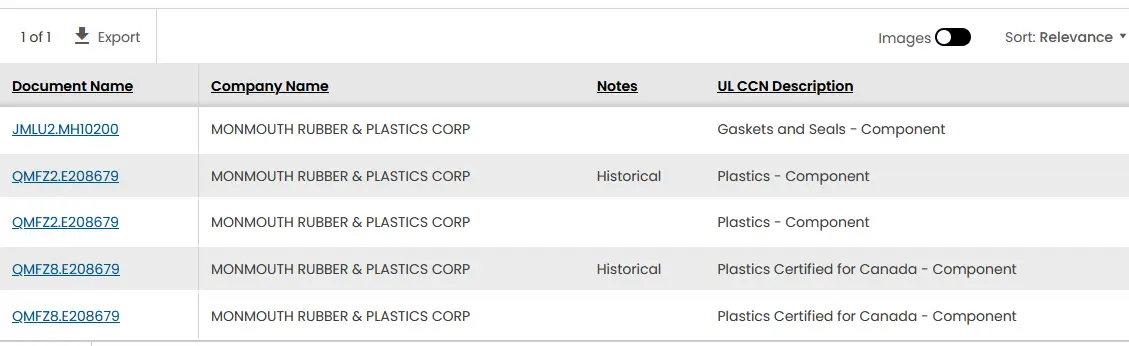
In the search bar, enter “Monmouth Rubber”. This will provide a list of our different file listings:

Table

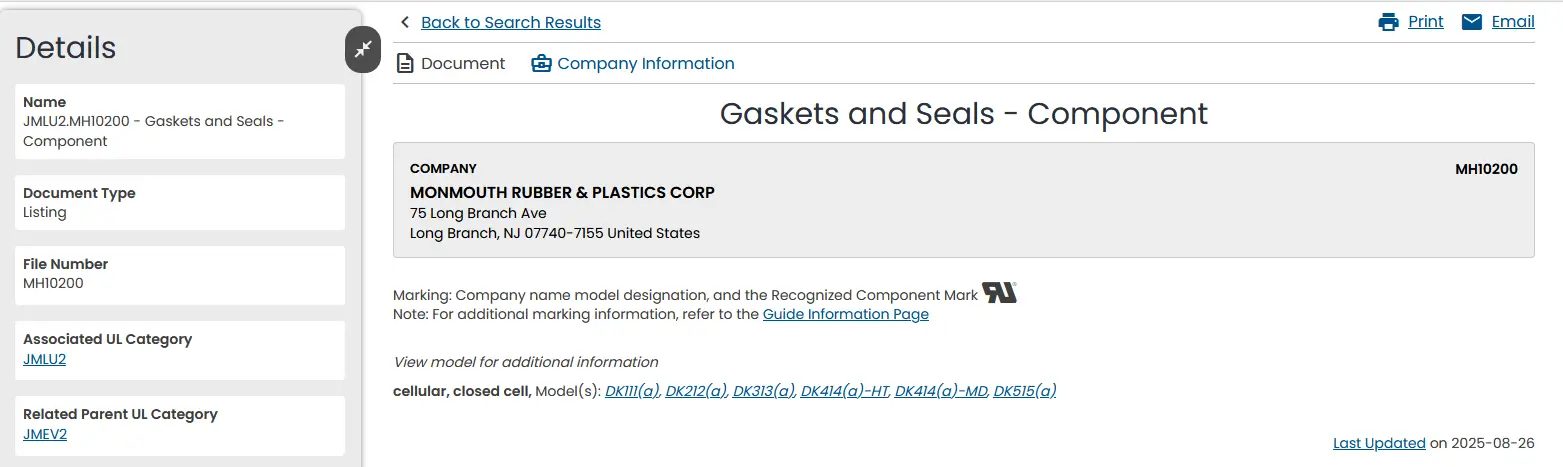
Click on any of the Document Name links, e.g., JMLU2.MH10200 will take you to the next information page:

Gasket and Seals

If you click on any of our stock numbers, e.g., DK1111, it will take you to the next section with even more information that can be useful for your evaluation.

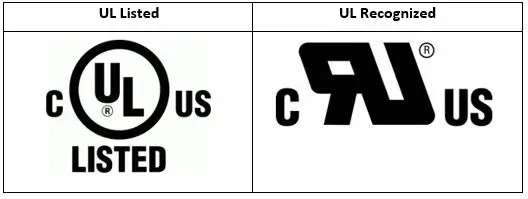
The difference between UL Listed and UL Recognized

A UL listing is for finished end-user products. UL Recognized is for materials (called Components within UL) that can be used to be part of a UL listed product.

In other words, a UL listed product is the final product, whereas a UL Recognized product is a component of the final product. For a product to be UL listed, it needs to be UL evaluated, and its components must be UL Recognized.

The logos for UL Listed and UL Recognized are different:

The information provided above can be overwhelming and extensive, and we know it can generate subsequent questions for a particular application, for further information, we have implemented our “Ask John” technical service program, which is Monmouth’s global technical support service. It’s free & brings real value to your company.

It allows Monmouth’s customers and visitors to have a 24/7 Technical Library & Test Lab, absolutely free.

Have a technical question or problem, just call or email & “Ask John“

– John Bonforte, Sr.

What is K factor?

QUESTION:

K factor is thermal conductivity (heat transferred per unit of time for unit area for a temperature gradient of one °F per unit length of heat path), Btu-in./h-ft.2-°FWhat is K factor?

ANSWER:

K factor is thermal conductivity (heat transferred per unit of time for unit area for a temperature gradient of one °F per unit length of heat path), Btu-in./h-ft.2-°F

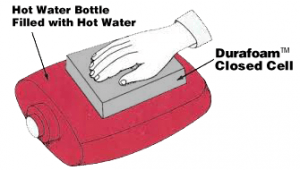
“k”: Thermal conductivity, the amount of heat (Btu’s) transferred in 1 hour through 1 square foot of a homogeneous material 1 inch thick for a difference in temperature of 1°F. For example, the “k” for Durafoam DK1111 is 0.275 at 90°F. This means that for a 1 inch thickness there is a heat transfer of 0.275 Btu per hour per square foot for each degree difference in temperature between its two surfaces. Usually expressed in Btu-in./h-ft.2-°F in the insulation field. – John Bonforte, Sr.

Monmouth Rubber & Plastics
Privacy Overview

This website uses cookies so that we can provide you with the best user experience possible. Cookie information is stored in your browser and performs functions such as recognising you when you return to our website and helping our team to understand which sections of the website you find most interesting and useful.