What Is the Difference Between UL JMLU2 and JMST2?
When comparing UL JMLU2 and UL JMST2, the most important distinction is simple:
JMLU2 is the generic category for material properties, while JMST2 applies to a specific end-product application.
That difference matters because engineers, designers, and buyers are often not asking the same question.
Sometimes the question is:
“What can this material do?”
Other times the question is:
“Is this gasket acceptable in this specific application?”
Those two questions lead to two different UL paths.
This category covers elastomeric materials supplied in sheet form or as formed or cut gaskets. These gaskets are evaluated for use in specific end-product applications.
JMLU2: A Material-Based UL Category
According to Monmouth Rubber’s existing technical explanation, JMLU2 is the main gasket and seal category and covers elastomeric and composite gasket materials in a wide range of forms, including:
- O-rings
- seals
- shaft seals
- flexible cellular gaskets
- facings
- sheet materials
- special forms
- poured-in-place gaskets
In other words, JMLU2 is broad. It is intended to describe and evaluate the material itself, rather than limit the review to only one finished gasket design or one narrow end use. That is why Monmouth describes JMLU2 as the generic category for material properties.
What JMLU2 is really intended to do
Monmouth states that this category is designed to provide a profile of the material properties. UL investigates the material with respect to characteristics such as:
- tensile strength
- elongation
- compression set
- tensile set
- hardness
- low temperature performance
- retention of these properties after accelerated aging
- retention of these properties after exposure to various environments
That means JMLU2 is valuable because it helps define how a gasket or seal material performs before it is tied to one exact finished product.
Why that matters
A material-level category like JMLU2 helps engineers and product designers compare materials against performance needs. Monmouth explains that these properties help designers and engineers identify materials that meet their requirements and comply with the safety standards associated with their products.
So, from a practical standpoint, JMLU2 helps answer questions like:
- Does this material have the physical strength required?
- Will it retain important properties after aging?
- Can it hold up after environmental exposure?
- Is it a strong candidate for a sealing application before the final product is fully defined?
That is why JMLU2 is often the more useful category when the conversation starts with material selection.
Expanded Focus on JMLU2
If your goal is to add more detail around JMLU2, this is the strongest way to position it on the page:
JMLU2 is about the material profile
JMLU2 is not just a label. It is a way of identifying how a gasket or seal material has been investigated from a property and performance standpoint. Monmouth’s explanation makes clear that the category is structured around measurable characteristics such as strength, elasticity, hardness, compression behavior, low-temperature behavior, and property retention after aging and environmental exposure.
JMLU2 covers many gasket and seal forms
Unlike a narrow application category, JMLU2 spans many common sealing forms, from O-rings and shaft seals to flexible cellular gaskets, sheet materials, and poured-in-place gaskets. That breadth is important because it shows that JMLU2 is centered on the material class and its performance profile, not just one final gasket geometry.
JMLU2 helps earlier in the design process
Because JMLU2 is built around the material’s properties, it is especially useful when a design team is still determining what sealing material is appropriate. Monmouth notes that these investigated properties help engineers find materials that meet requirements and align with applicable safety standards.
JMLU2 can also support end-product needs
Monmouth also notes that materials in this category may be evaluated to specific end-product standard requirements as requested. That is an important point, because it shows JMLU2 is fundamentally material-based, but it can still be relevant to downstream product compliance needs when a customer or design requires that added connection.
JMST2: A Specific Application UL Category
Monmouth’s explanation of JMST2 is much more focused. It states that this category covers elastomeric materials supplied in sheet form or as formed or cut gaskets, and that these gaskets are evaluated for use in specific end-product applications.
That makes JMST2 narrower than JMLU2.
What JMST2 means in practice
JMST2 is less about building a broad material property profile and more about whether a gasket material, typically in sheet, formed, or cut-gasket form, is suitable for a defined end use. Monmouth’s wording is concise, but the implication is clear: the evaluation is tied to application context.
So while JMLU2 helps answer:
“What does this material look like from a properties standpoint?”
JMST2 is closer to:
“Is this gasket acceptable for this specific end-product use?”
The Difference in Plain English
A simple way to explain the distinction is this:
JMLU2
Material-focused
Used when the goal is to understand the general physical and performance characteristics of a gasket or seal material.
JMST2
Application-focused
Used when the gasket is being evaluated for a particular end-product application.
Side-by-Side Comparison
| UL Category |
Primary Focus |
Typical Scope |
| JMLU2 |
Generic material properties |
Broad gasket and seal material profile across multiple forms |
| JMST2 |
Specific end-product application |
Sheet, formed, or cut gaskets evaluated for defined use |
Why Customers Often Ask About JMLU2 First
For many buyers and design engineers, JMLU2 is the more important starting point because it gives a broader understanding of the sealing material itself. Monmouth’s description shows that JMLU2 covers the kinds of physical and environmental property data that matter when choosing a material for performance, durability, and compliance.
That makes JMLU2 especially useful when:
- a customer is comparing different gasket materials
- a design is still in development
- the final gasket geometry is not the only issue
- long-term performance matters
- the material must retain key properties after aging or exposure
Final Takeaway
The best way to understand the difference is this:
JMLU2 is the broader, generic UL category used to profile gasket and seal material properties.
JMST2 is the narrower UL category used when gasket materials are evaluated for a specific end-product application.
Or, even more simply:
JMLU2 qualifies the material.
JMST2 qualifies the use.
Need help choosing the right UL-listed gasket material?
Monmouth Rubber can help you identify the right closed-cell sponge, sheet material, or fabricated gasket for your application and compliance requirements.
Contact Monmouth Rubber for technical support or material guidance.
HOW TO FIND OUR UL LISTINGS
On any browser, go to: https://iq.ulprospector.com/en
If you don’t have an account, we suggest creating one using your email.
In the search bar, enter “Monmouth Rubber”. This will provide a list of our different file listings:
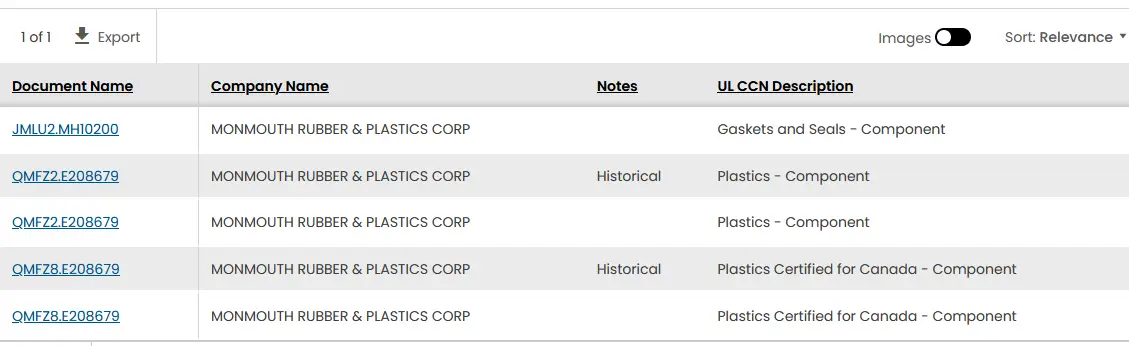
Click on any of the Document Name links, e.g., JMLU2.MH10200 will take you to the next information page:
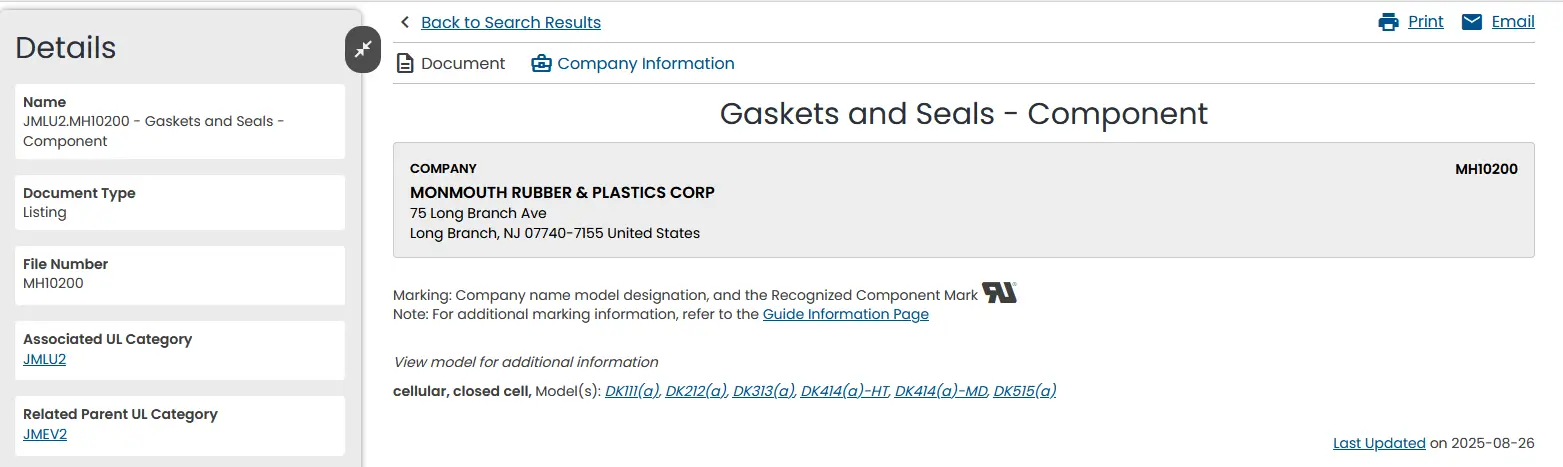
If you click on any of our stock numbers, e.g., DK1111, it will take you to the next section with even more information that can be useful for your evaluation.
The difference between UL Listed and UL Recognized
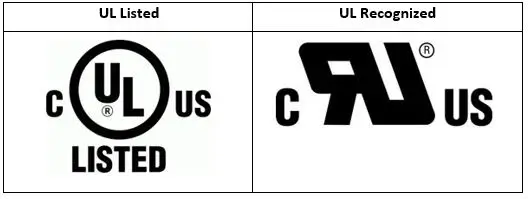
A UL listing is for finished end-user products. UL Recognized is for materials (called Components within UL) that can be used to be part of a UL listed product.
In other words, a UL listed product is the final product, whereas a UL Recognized product is a component of the final product. For a product to be UL listed, it needs to be UL evaluated, and its components must be UL Recognized.
The logos for UL Listed and UL Recognized are different:
The information provided above can be overwhelming and extensive, and we know it can generate subsequent questions for a particular application, for further information, we have implemented our “Ask John” technical service program, which is Monmouth’s global technical support service. It’s free & brings real value to your company.
It allows Monmouth’s customers and visitors to have a 24/7 Technical Library & Test Lab, absolutely free.
Have a technical question or problem, just call or email & “Ask John“
– John Bonforte, Sr.

 What is the difference between compression set suffix B2 and B3 in ASTM-D1056?
 What is R factor?
 What is K factor?