
Understanding the Difference Between Short Ton, Long Ton, Metric Ton, and Imperial Ton
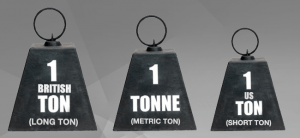
The word “ton” is often used as a general term for a large amount of weight, but in practice it can refer to multiple distinct units of measurement. These units are not equal, and misunderstanding them can lead to errors in manufacturing, shipping, and material specifications.
The most commonly referenced types are:
- Short Ton
- Long Ton
- Metric Ton (Tonne)
- Imperial Ton
While some of these terms overlap, each has a specific definition and historical context.
Short Ton
The short ton is the standard ton used in the United States.
- Weight: 2,000 pounds
- Equivalent: 907.18 kilograms
This unit comes from the U.S. customary system, where one ton equals 20 hundredweight, and each hundredweight equals 100 pounds.
Typical Applications
- U.S. manufacturing and production
- Construction materials
- Domestic freight and logistics
- Industrial materials such as rubber, polymers, and metals
In most U.S. industrial settings, “ton” without further qualification means short ton.
Long Ton
The long ton is a unit from the British Imperial system and is sometimes informally referred to as the British ton.
- Weight: 2,240 pounds
- Equivalent: 1,016.05 kilograms
The long ton is calculated using Imperial hundredweight, where one hundredweight equals 112 pounds. Twenty hundredweight equal one long ton.
Typical Applications
- Historical British measurements
- Maritime and naval contexts
- Legacy engineering and shipping documentation
Although no longer widely used in modern trade, the long ton still appears in specialized or historical references.
Imperial Ton
The Imperial ton is closely related to the long ton and, in most contexts, the two terms refer to the same unit.
- Weight: 2,240 pounds
- Equivalent: 1,016.05 kilograms
Key Clarification
In the Imperial system, the term ton specifically means long ton, not short ton. As a result:
- Imperial ton = Long ton
- Both are based on the 112-pound hundredweight
- Both total 2,240 pounds
The term Imperial ton is often used when distinguishing British Imperial measurements from U.S. customary units, particularly in international or historical discussions.
Where You May See It
- Older British technical standards
- Ship displacement and naval specifications
- Historical trade, mining, and infrastructure documents
Understanding this equivalence is important because some documents may use Imperial ton and long ton interchangeably.
Metric Ton (Tonne)
The metric ton, also called a tonne, is the standard ton used in the metric system and most of the world.
- Weight: 1,000 kilograms
- Equivalent: approximately 2,204.6 pounds
Unlike the short and Imperial/long tons, the metric ton is directly tied to the International System of Units (SI), making it consistent and universally accepted in global manufacturing and trade.
Typical Applications
- International shipping and logistics
- Manufacturing and engineering
- Scientific and technical documentation
- Global material specifications
Comparison Table
| Ton Type | Pounds | Kilograms | Measurement System |
| Short Ton | 2,000 lb | 907.18 kg | U.S. Customary |
| Long Ton | 2,240 lb | 1,016.05 kg | British Imperial |
| Imperial Ton | 2,240 lb | 1,016.05 kg | British Imperial |
| Metric Ton | 2,204.6 lb | 1,000 kg | Metric (SI) |
Why These Distinctions Matter
Because the difference between these units can exceed 200 pounds per ton, failing to specify the correct ton type can lead to:
- Incorrect material quantities
- Pricing and contract discrepancies
- Shipping weight errors
- Production and engineering miscalculations
In industries that deal with bulk materials—such as rubber manufacturing and industrial components—precision in weight terminology is essential.
Best Practice for Industrial Use
To avoid confusion:
- Always state the specific type of ton
- Include pound or kilogram equivalents
- Use metric tons for international documentation whenever possible
Clear definitions ensure accurate communication across suppliers, customers, and global partners.